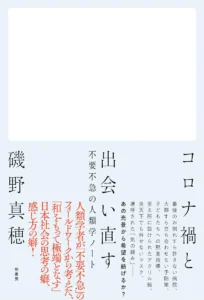
Publisher:kashiwashobo,Tokyo
Awards
-
🏆 Winner of the 33rd Yamamoto Shichihei Award (2024)
The Yamamoto Shichihei Award is a Japanese literary and non-fiction prize honoring outstanding works of social commentary and cultural criticism.Yamamoto Shichihei (1921–1991) was a Japanese essayist and social critic, best known for his sharp analyses of postwar Japanese society, organizations, and patterns of thought through historical, cultural, and religious perspectives. One of his best-known works is A Study of “Air” (Kūki no Kenkyū)
-
🏅 Ranked 6th in the 2024 Kinokuniya Humanities Award
The Kinokuniya Humanities Award is a Japanese book prize organized by Kinokuniya, one of Japan’s leading large bookstore chains, highlighting outstanding humanities titles each year.
Overview
While much of the Western world grappled with the tension between state mandates and individual liberty, Japan navigated the COVID-19 pandemic through a different mechanism: “Voluntary Compliance.” Without a single legal lockdown, the nation achieved some of the highest rates of cooperation in the world. But as a cultural anthropologist, I felt a growing sense of unease: at what cost to our social fabric?
In this book, I offer an anthropological reflection on Japan’s “shadow mandates.” This work is rooted in fieldwork I conducted across three distinct regions and interviews with those on the front lines, including physicians involved in cluster suppression, nurses, and care workers. My goal was to uncover the cultural and structural machinery that drove Japanese behavior during this unprecedented crisis.
In this work, I explore:
The Normalization of the Absurd: I investigate why excessive infection measures—such as outdoor masking in sweltering heat, ubiquitous acrylic partitions, and the three-year ban on lunchtime conversation in schools (moku-shoku or “silent eating”)—persisted for three long years. While some measures were perhaps understandable in the initial confusion, their continuation for over 1,000 days was an anomaly. I look at the devastating human cost of this period: families unable to visit loved ones in their final moments, and the heartbreaking reality of being barred from attending cremations or saying a proper goodbye.
The Narrative of “Loosened Discipline”: I analyze how the concept of ki-no-yurumi (loosened spirit/discipline) was used by experts to blame infection surges on individual behavior, creating a suffocating cycle of social surveillance and shame.
A Different Way of Caring – “Iroha”: Amidst this national climate of excessive restriction, I highlight a nursing care facility called Iroha in Kagoshima. While most facilities across Japan made strict visitation bans the “new normal,” Iroha prioritized the daily lives and dignity of the elderly. Through my observations and interviews at Iroha, I reveal how they recognized the “strangeness” of the national situation early on and maintained care that truly valued both life and living.
Through the lens of medical anthropology, I challenge the ethics of a society that prioritizes collective harmony and “safety” over the lived experiences of individuals. This book is a reflection on what happens when safety becomes an unquestionable dogma, and a defense of the “non-essential” human connections that define our very humanity.
【Speech for the 33rd Yamamoto Shichihei Award】
Newspaper Reviews, Interviews, and Dialogues
Mihoko Ishii / Nikkei Newspaper
Fumio Otake / Mainichi Shimbun
Mayumi Nakazawa / Fukushima Nippo
Junko Sakai / Shukan Bunshun
Media Appearances, Discussions, and Interviews
- Kyodo News ‘Current Location’
- YouTube “Shintaro Uchinuma’s New Book Picks”
- PIVOT: What Does Medical Anthropology Tell Society?
- Culture Broadcasting ‘Ohtake Makoto’s Golden Radio’
- TBS Radio ‘Satei Takeda’s Pre-Friday Night’
- Tokyo FM ‘Blue Ocean’
- JFN ‘FUTURES’ Takashi Nakajima ‘Talking Catcher’
- Asahi Shimbun Re:Ron
Share this book